
For guitarists, both beginners and seasoned players alike, mastering new chords is an essential part of musical growth. Among these, the B7 chord stands out not just for its versatile use across various genres but also for its relatively complex finger positioning compared to simpler chords like G or C. Understanding the B7 chord in depth can open doors to soulful blues, lively rock, and even the richer tones of jazz.
Understanding the Mechanics of B7
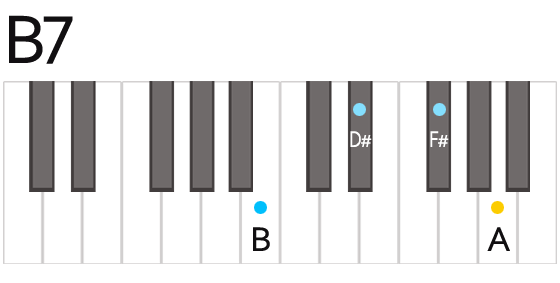
The B7 chord is a four-note sequence consisting of the root note B, along with D#, F#, and A. This structure forms part of what is known in music theory as a seventh chord—a chord comprising a triad plus an extra note that forms an interval of a seventh above the chord’s root. This additional note adds a layer of complexity and emotional depth, making the sound of the B7 chord both rich and compelling.
When playing the B7 chord on the guitar, the typical finger positioning requires dexterity and coordination, as your fingers must press down on multiple strings concurrently in a non-linear pattern. Ideally, the progression should feel smooth and not forced, which comes with practice and a bit of patience.
Steps to Master the B7
- Finger Placement: Place your index finger on the 1st fret of the D string, middle finger on the 2nd fret of the A string, ring finger on the 2nd fret of the G string, and pinky on the 2nd fret of the high E string.
- Strumming: Ensure that you strum from the A string down, avoiding the low E string. This helps produce the clearest sound.
- Practice Muting: Use the tip of your index finger to gently mute the low E string if your strumming accidentally includes it.
- Consistency: Regular practice is key to developing muscle memory for the B7 chord. Short, focused practice sessions can be more effective than less frequent, longer ones.
Common Mistakes to Avoid
One of the most frequent mistakes involves incomplete pressing of strings, leading to muted or buzzing sounds. Check each string for clarity by plucking them individually while holding down the B7 chord. Additionally, improper finger angling can distort the sound. Try to maintain a curved finger position to ensure that fingertips, not pads, press down on strings.
Another common pitfall is excess tension in the hand. Tension can lead to quicker fatigue and affect the sound quality. Allow your hand to relax during playing and make sure you’re not pressing the strings harder than necessary.
Applications of the B7 Chord
The B7 chord finds its strength in varied musical settings. It’s a staple in blues progressions where it often resolves tension by returning to the E major chord. You can also explore its use in rock and roll classics, where the added seventh note lends a deeper resonance. Jazz musicians appreciate the B7 for its contribution to complex harmonies and innovative rhythm patterns.
Experience with this chord can immensely enrich your musical toolkit, enabling you to navigate through intriguing chord progressions with ease. Whether as a transition in a mellow ballad or as a part of a vivacious rock anthem, the B7 has the potential to elevate your playing.
Conclusion
The B7 chord may present a challenge initially, yet the payoff is great. It offers an opportunity to build both technical skill and musical understanding. By dedicating time to mastering the B7, you not only enhance your playing capabilities but also invite a rich palette of sound into your performances. Further exploration and learning can be continued on platforms such as B7, where community and resources provide ongoing support for aspiring musicians.